Why are we scared of darkrooms?
Inside DTF, the Berlin-based collective redesigning desire for all genders
 Published on November 10th, 2026
Before I moved to Berlin, the word “darkroom” felt obscure to me. I pictured mostly gay men having sex in a totally dark and empty room, so it never felt related to my own existence. It was echoing to another world with its own language and no obvious door for someone who doesn’t navigate these scenes. Time has passed, and Berlin taught me another way.
Today I’m interviewing DTF, the collective running all-gender f*ckspaces (their preferred word for “darkroom,” we’ll get to why) at WHOLE Festival. We talked about how playrooms can be whimsical, soft, tender places to explore yourself, and how much politics these spaces carry.
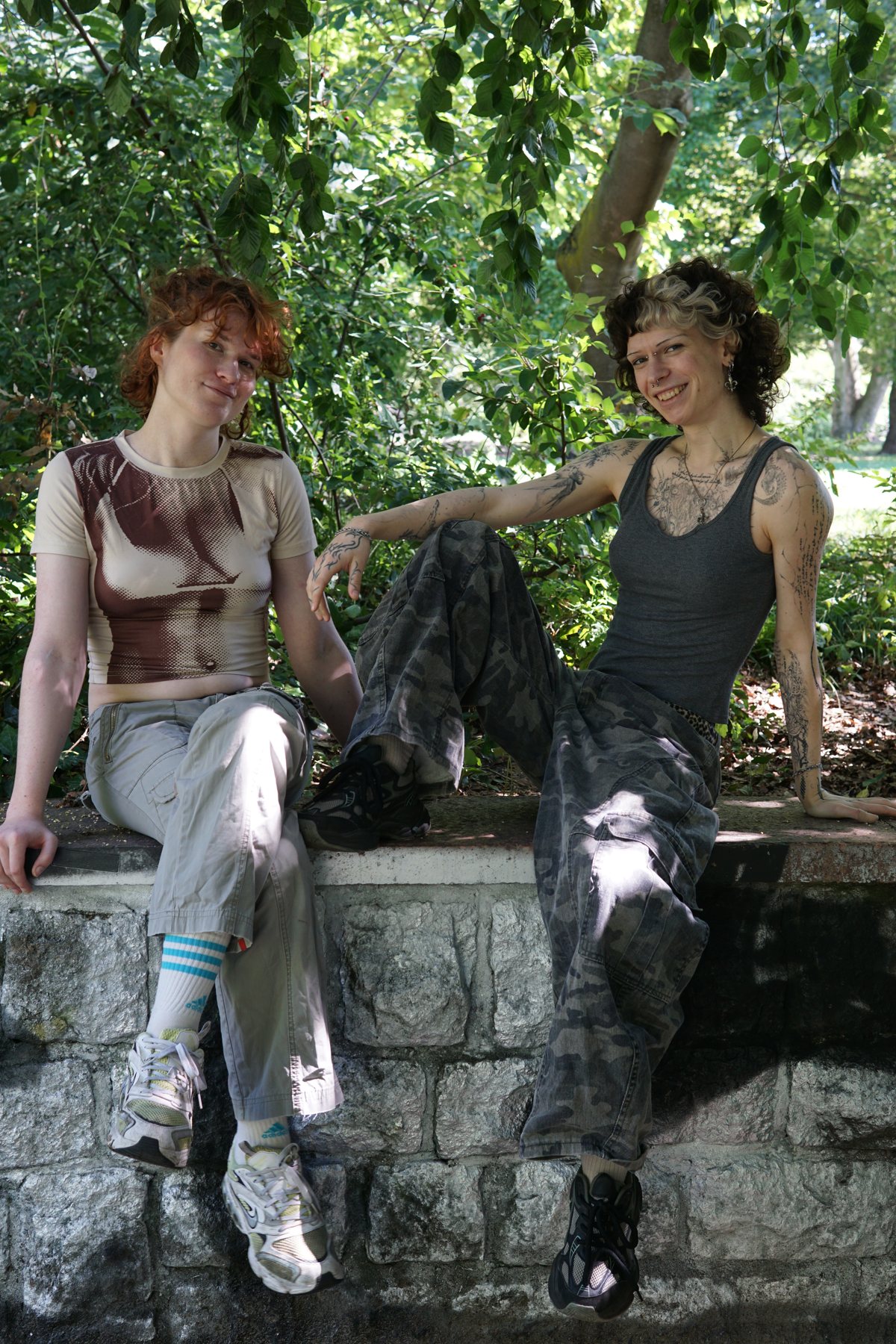
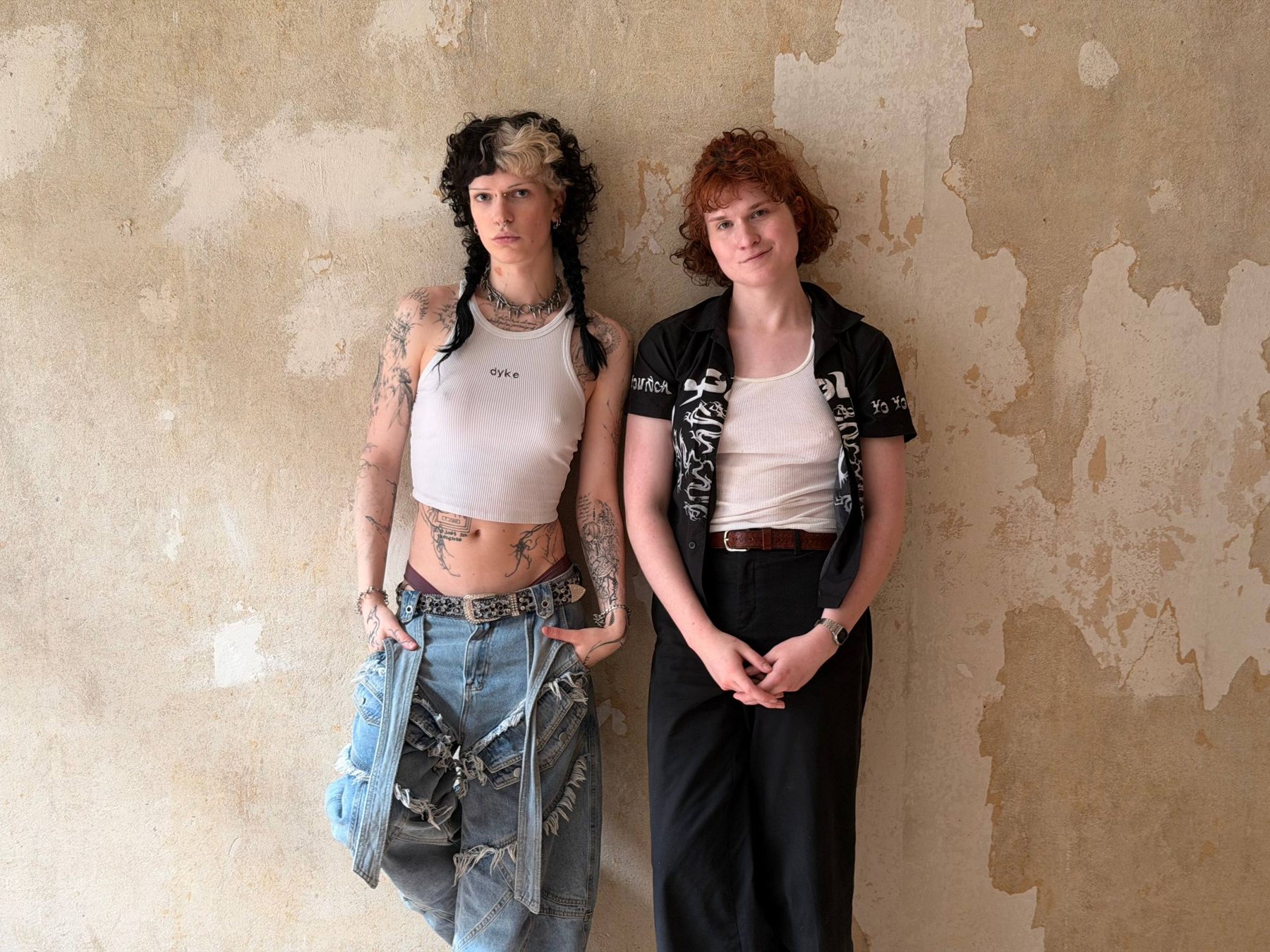
I caught up with Bianca (Production Lead at DTF, she/her) and Rhea (Communication Lead at DTF, she/her), two of the people behind this project to make better darkrooms.
How did DTF start?
“DTF started three years ago,” Bianca begins. “The trigger was frustration. We were seeing attempts to create FLINTA darkrooms that were frankly disappointing: either because these spaces weren’t as inclusive as they said they were, or because once you got inside, it wasn’t designed in a way to encourage anything sexy to happen.”
She continues: “What I love about cruising spaces is the cruising itself, i.e., the potential for social connections and the openness inherent to it. The FLINTA spaces I visited weren’t creating that. They were just mattresses on the ground where you came with your partner during the party, nothing inviting new social connection.”
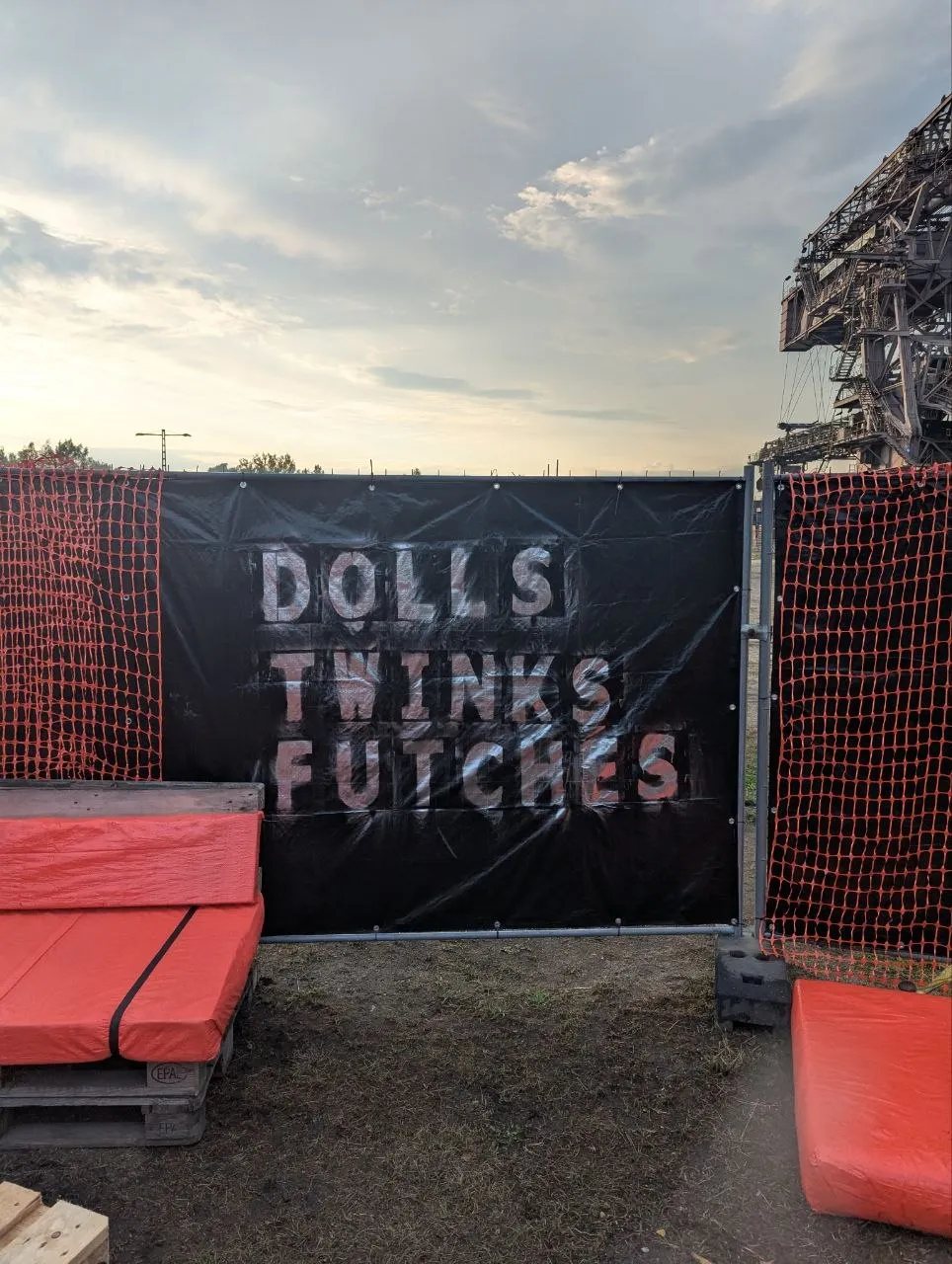
“This left us thinking that there has to be a better way. We put together a team of queer architects and academics and started thinking about what a better darkroom could look like, not just at the level of physical design, but ideologically too. And that’s how DTF was born. The name initially stood for Dykes, Trannies, Faggots, a reclamation of three slurs.”
Does it mean that DTF spaces are only for these three categories of people?
“It definitely started that way,” Rhea explains. “The initial idea was to make a space for the more marginalized members of the queer community: the specific use of slurs was a rejection of respectability politics. But over time, we realized it’s more about how people behave than who people are. DTF also means ‘Down To Fuck,’ so if you can engage in a way that is open and respectful you are welcome in the space regardless of identity.”
“At this point, DTF is an all-gender space. We really want to give people the agency to make their own experience,” Bianca says. “We don’t want to control who’s allowed in because we don’t want people inside spending their time making assumptions about who does and does not belong, being territorial. It’s a clear departure from the FLINTA model. If you’re down to explore in a space that centers queer desire, it’s a space for you.”
So how do we design a fuckspace (not a darkroom) that is inclusive and inviting?
Entering a DTF space is about intentionality. At WHOLE they have hosts who greet you at the entrance and explain the concept of the space. “We see how people react when we present the space, that’s already the first filter,” Bianca says. “If someone isn’t able to emotionally engage with the host, they likely aren’t able to engage with the people in the space either. Something as simple as a hello becomes a useful vibe check to see if someone is a fit for the space.”
“There’s also an intermediary outside garden space before the room itself. Out there, people can hang a bit, hesitate, come back, leave,” she continues. “The idea is to encourage desire, not to force it,” Rhea adds. “Finally,” says Bianca, “to enter the main room, the pleasure dome, you take the time to take off your shoes.” The idea is that you pass through what they call “layers,” social filters that let people introspect and filter themselves out before they go further. Every threshold is a choice.
Beyond the journey, the DTF collective put a lot of thought into the design of the space itself.
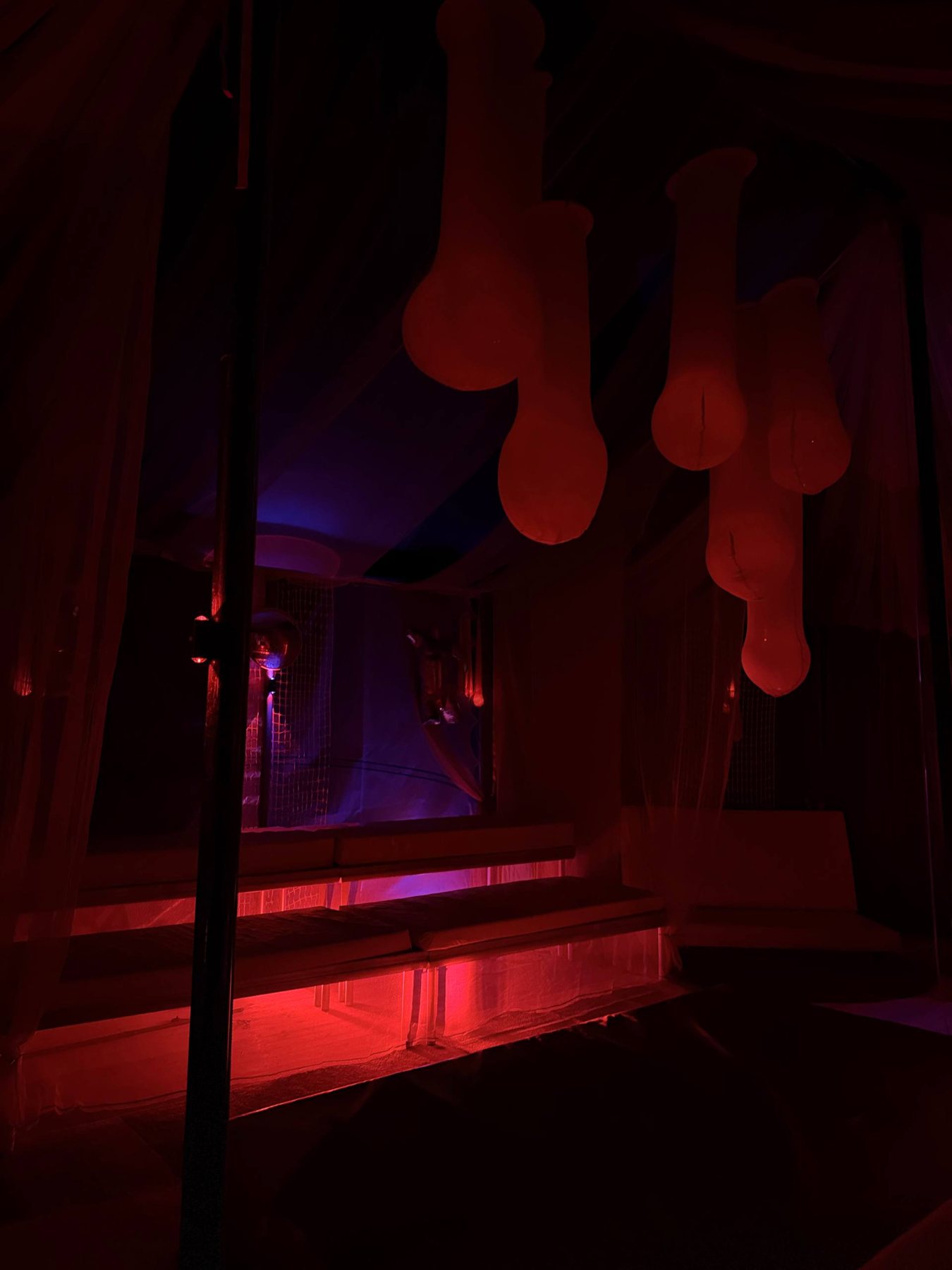
“Gay men, God bless them, can have sex standing up or kneeling.” Bianca laughs. “They can have sex in minimal darkrooms and improvised cruising spaces. But for everyone else, you might need a space to lie back or sit. If it’s not comfortable, people don’t feel safe. So, we thought a lot about elevation.” That means mattresses, cushions at multiple levels so bodies can find their own configurations.
“This covers the physical comfort part, but social comfort is just as important,” says Rhea. “We have sofas and places to sit so you can enter the space and talk with someone for a bit, see if there’s a vibe, take the time to build up your desire.” She continues: “We also make sure that the space is not too dark either. We call it a fuckspace, not a darkroom, because you can see people. You can have eye contact; we want people to be able to flirt inside. We favor red-toned lighting to build desire slowly. It’s sexy to see what’s going on around you.”
“And finally, basic things such as no smoking inside, designing the space in a way that people always have the ability to step in, or step back out,” Bianca adds.
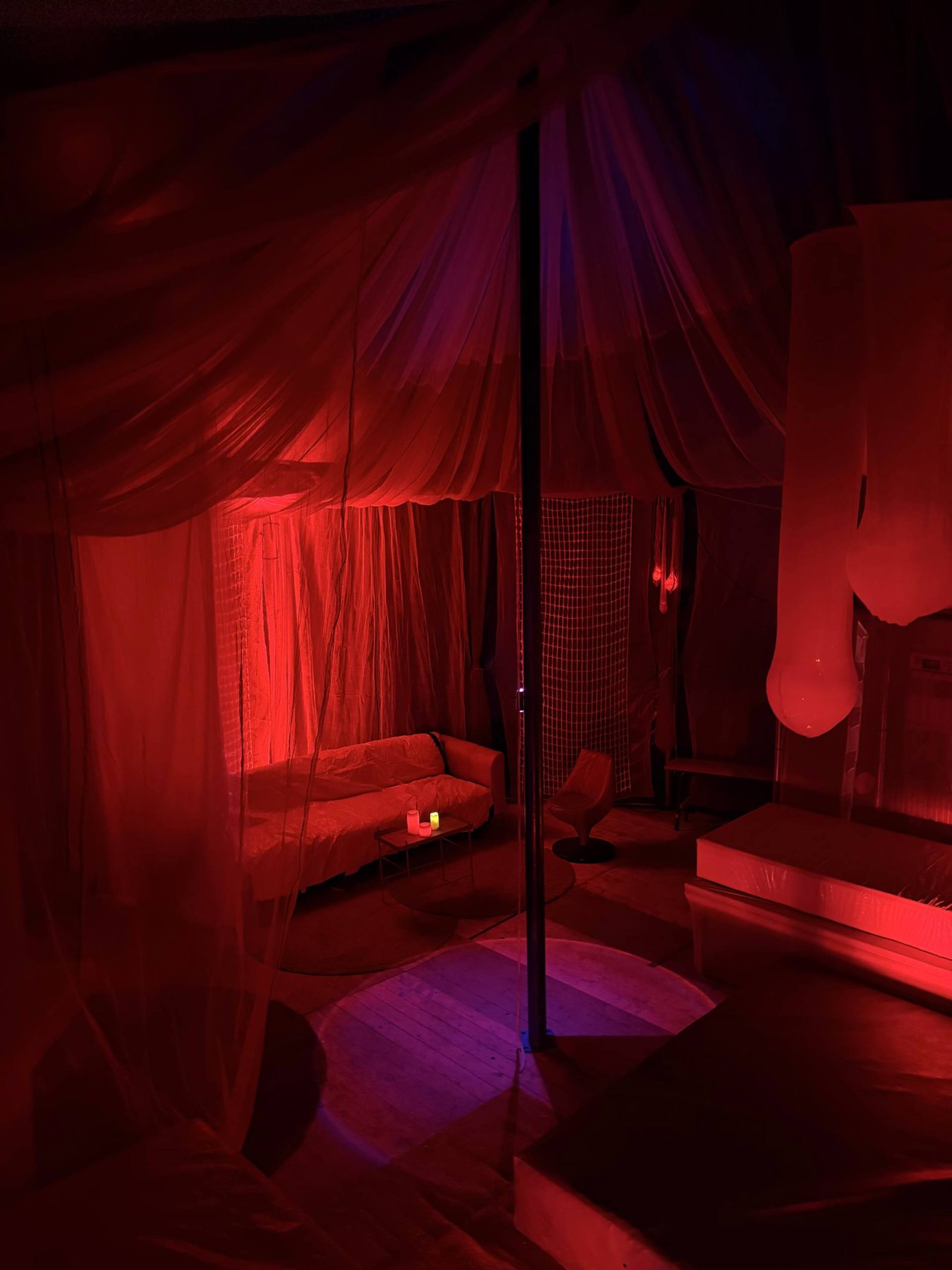
Sounds cute, but how do you make sure that the room doesn’t end up in a cozy space with sofas where people just chat?
“The fact that it is an all-gender space really helps with that. One of DTF’s ambitions is to fuse different sex cultures into the same room, and put people in a space where they’re humble enough to learn from each other,” Rhea says.
Bianca jumps in: “What’s happening around you influences you. Lesbians, for instance, can see gay boys get right down to fucking while gay boys can see lesbians taking the time to talk before having sex, and both sides can think ‘oh, I’d like that too.’ We’re taking the best parts of different queer cultures and letting people take something from each other.”
Why do you think these spaces matter?
“People leave DTF spaces and tell us: ‘Oh, this changed my thinking about darkroom spaces” Bianca says. “We feel accomplished when people walk into the space, and they see lesbians fucking gay guys, and it rewires their brain. We feel accomplished when DTF gives them the opportunity to make choices they’ve never made before.”
Rhea adds, “And it makes them raise their expectations for other spaces too. Once you’ve been in a fuckspace designed with this much intention, you don’t accept the subpar setup anywhere else. You start asking: why isn’t this the standard?”
“DTF is about enjoyment and hedonism,” Bianca says. “But there’s something very political about these spaces too. Darkrooms are places of contact. We really like Samuel Delany’s Times Square Red, Times Square Blue, describing the Times Square porn theaters in New York as fostering inter-class, interracial, intercultural contact between people who otherwise stay in very separate parts of their society.”
Berlin’s queer scene can be quite segmented. The dyke scenes, the gay boy scene, the trans one, the POC scenes, the academic crowd, the party kids, etc. They don’t necessarily meet each other. But in a DTF space, they can. That contact, even just for a night, creates something powerful.
What would be your advice for anyone who hasn’t entered such a room before but is curious too?
Bianca is clear: “First, I think it can be good to remind people that having sex in a playroom doesn’t necessarily mean having sex with a complete stranger, someone you didn’t even talk to. It can, and for some people this is specifically the exciting part. But for me, for instance, I’ve never been cruising in public spaces, and I don’t want to have sex with people I don’t connect with. What I like about these spaces inside of parties is that you can still have a social connection first: someone you vibe with on the dancefloor, someone you already knew from before but didn’t interact with on this sexual level, or someone you meet in the playroom but connected with. You can always take a moment to be present with the other person’s body before anything else.”
Rhea’s advice is more about the psychological posture: “You have to be comfortable approaching others, to feel centered and comfortable with the no, and you also have to trust the other person to delineate their own boundaries. A firm ‘no’ reflex is what makes casual sex safe. When it comes to physical contact, I’d always start with slow, soft touch at the beginning, so the other person has time to react.”
According to you, is there anything that queer women, non-binary and trans people could learn from the gay culture?
“Yes, definitely.” Bianca nods. “There’s a hyper-reliance on verbal consent in FLINTA spaces. Verbal consent is super important, of course, but I feel like people then forget that we can also use non-verbal cues, as a first hint to approach someone. Also use what the other person’s body is telling you and signaling you. Of course, validating with verbal consent before physically engaging is important, but there is a lot your body can say to the other person to invite someone into your desire. Gay culture is more forward with communication, both with the touch and with the no, and I think we can learn from that.”
Could you tell me about a moment from a DTF night that, according to you, captures what the whole thing is about?
Rhea smiles. “We love setting up big mattresses because they create the possibility for spontaneous mingling. I remember being in a group of lesbians having sex on the central mattress, and there was another group of lesbians also having sex on the central mattress, and before you knew it, we had merged into one big orgy. That’s DTF to me.”
Keep an eye out to see what DTF is up to; they’ll definitely keep building more spaces across Berlin’s nightlife.