
Is not being straight really that niche in 2026?
A field note on invisibility and what still gets overlooked.
 Published on July 7th, 2026
When I started telling people I was building an app for queer women, trans and non-binary people, one of the most frequent reactions was some version of the same thing. “It’s a bit niche, no?” / “Have you thought about extending it to all women?”
I’ve genuinely thought about all of it. But there’s a joke I keep replaying in my head: imagine going to the founder of Grindr in 2010 and telling him he should extend the app to all men, because otherwise it’s a bit niche. He would have laughed. Nobody has ever suggested that gay men should share their infrastructure with straight men to justify its existence.
So why us?
The numbers say otherwise.
Let’s start with math, because the “niche” framing collapses the second you look at it.
According to Gallup’s 2025 data, 9% of U.S. adults identify as LGBTQ+.
Zoom in and it gets more interesting. Women are nearly twice as likely as men to identify as LGBTQ+ (10.5% vs. 5.6%, Gallup 2025). Among Gen Z, the gap becomes vertiginous: 31% of Gen Z women identify as LGBTQ+ vs. 12% of Gen Z men.
Queer women are, in fact, the majority of the queer community, especially in the youngest generations. Most of these women identify as bisexual, followed by lesbian.
Trans identification among Gen Z is at 4.1%, versus 0.6% among Gen X (Gallup 2024).
So how did we become the ones who are “too specific” to build for?
Why the bisexual majority keeps disappearing.
There’s a second layer, which is more specifically about women’s desire.
More than half of Gen Z LGBTQ+ women identify as bisexual, but bisexual women are the group culturally read as least queer. The dominant read is that they’re “straight women who are experimenting” or “fooling around.” The dominant read of bisexual men is the opposite: they’re “gay in denial.” In both cases, the assumption is that desire really points toward men.
This is called the androcentric desire hypothesis in some research: whatever the person’s identity, everyone (including gay men and lesbians) tends to perceive bisexuals as more attracted to men than women. This means that even within our own community, women’s desire for women gets minimized.
And it’s not only external. What’s striking is how often bisexual and questioning women themselves minimize their attraction to women or decide it's not worth pursuing it. It’s a form of auto-erasure that’s been shaped over generations.
The result: we’re statistically many, but culturally spread thin. When someone doesn’t see us as a group worth building for, it’s because we’ve been told, and often internalized, that our desire is less real, less durable, less worth being taken seriously.
Because visibility isn’t the same as existence.
There’s a mental image most people have of what a gay man looks like, what a trans person looks like, what a queer woman looks like.
Meanwhile, the vast majority of queer women, and plenty of non-binary and trans people, could walk right past you every day and you’d never register them as anything other than straight or cis. It’s not that we’re not there. It’s that not everyone performs being queer in ways that are legible from the outside.
“I’m read as straight everywhere I go, even by other queer people.” I heard that from many lesbians presenting as femme. The default assumption in almost every setting is that everyone in the room is straight until proven otherwise. And the proof usually needs to be aesthetic. A big carabiner clipped to your belt loop, for instance.
Which means most of us go through life mis-read. So we get called niche when what’s actually happening is that we’re invisible.
Which brings us back to the “niche” thing.
I now understand what “niche” often means in these conversations. It usually means “not the default.” Gay men are queer and men, and men are still the default demographic that the economy builds around. Their queerness reads as a specific market, but their gender reads as universal. When we build for queer women, trans and non-binary people, we’re apparently doubling down on specificity.
Except we’re not. We’re building for one of the largest and most vibrant parts of the queer community. That’s the opposite of niche.
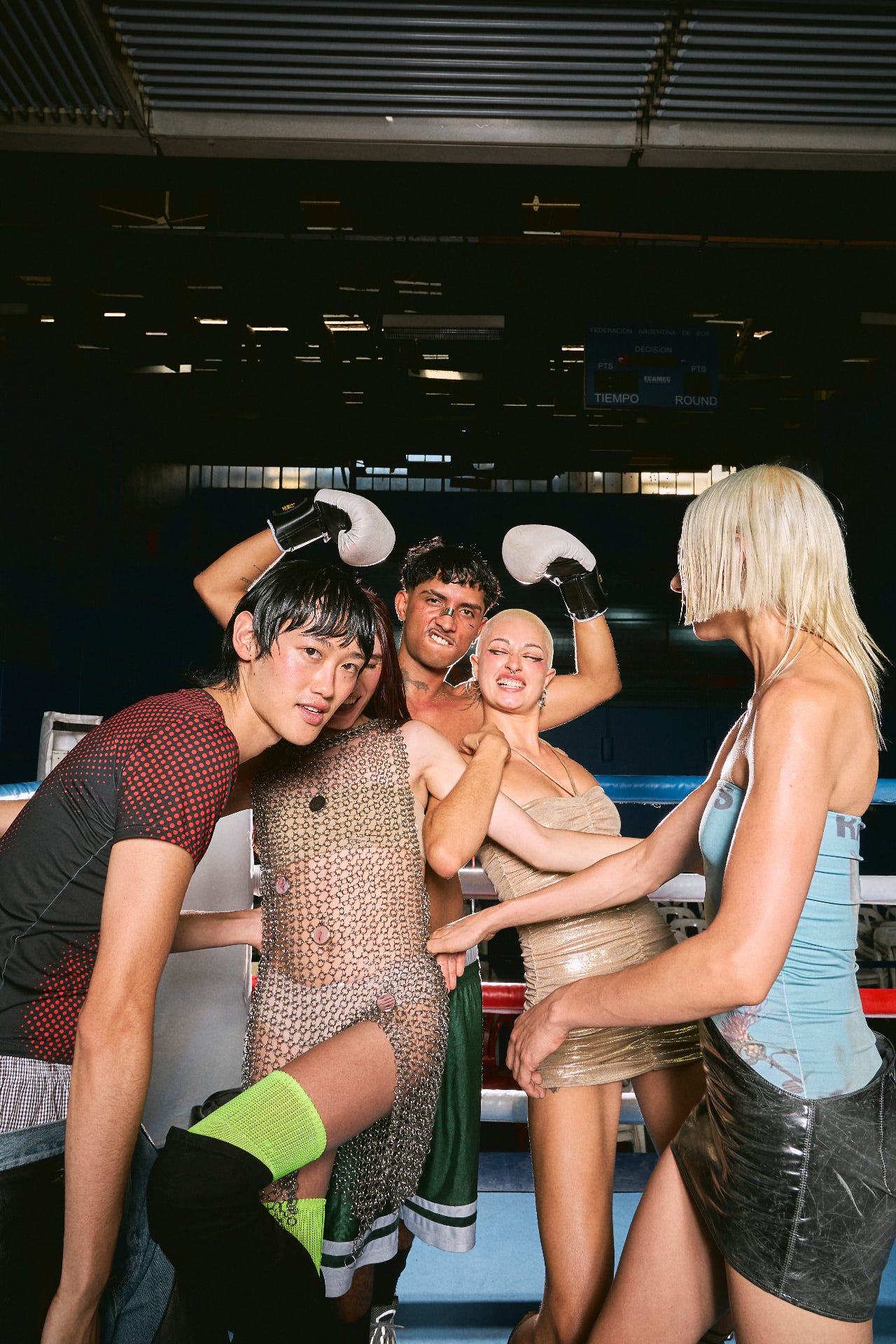
Who loses when we’re called a niche?
Everyone, actually.
The people deep inside a very queer scene end up convinced they know everyone, when they only see the same small crowd on rotation. The people who aren’t in that scene keep hearing that we’re “too niche” and internalize the idea. Everyone else, the builders, the platforms, the ones who could create spaces for us, look at the label and decide it’s not worth the effort.
So.
In 2026, in a moment where queerness has never been more numerous or more visible in aggregate, it can still feel extremely difficult to actually meet each other and act on our desire for connection.
The default assumption is still that we’re too small, too spread out, too complicated to build a proper space for.
We’re not.
Pulp is being built with that in mind. More soon.
Pulp is built with the people it’s for. If any of this landed and you feel like sharing your thoughts, I want to hear from you.
Naomi